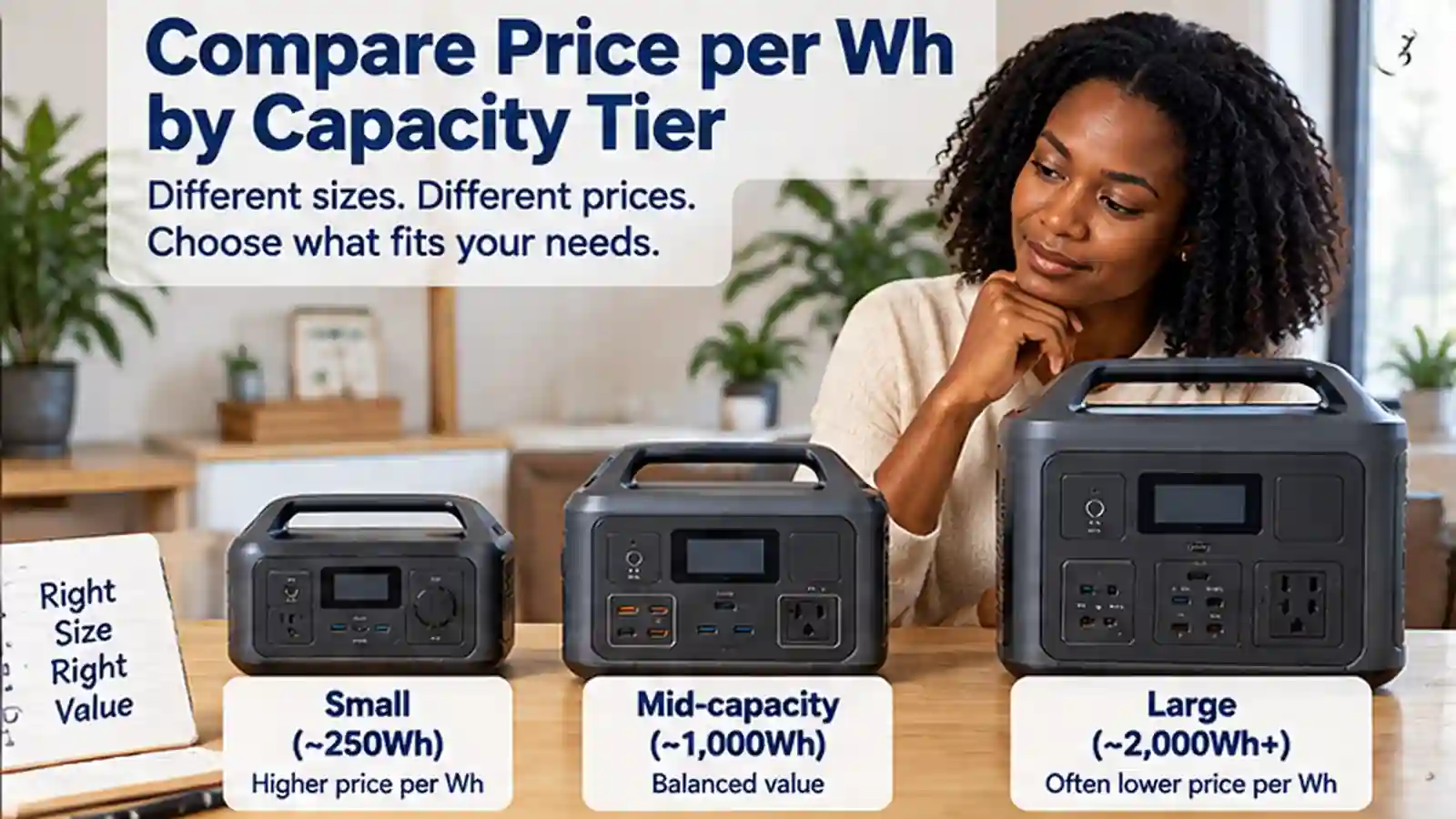
 Compare price per Wh within the right capacity tier before judging value.
What Are Normal Price-per-Wh Benchmarks by Capacity Tier,
and What Is a Red Flag?
Price per Wh is a useful way to compare portable power stations, but there is no single number that makes every station a good or bad deal. Smaller stations normally cost more per Wh, while larger stations often spread their fixed costs over more battery capacity.
The best way to use this page is:
- Calculate your power station’s $/Wh
- Compare it to your capacity tier
- Run the red-flag check if it’s below the pause + verify line
- Then decide based on output, warranty, seller, and landed cost.
So the vital question is this: “Is the price normal for the capacity tier I am considering?” To answer that question, I usually check the four points above. Let’s begin with price per Wh.
STEP 1: CALCULATE
PRICE PER WH
Use the current
station-only price
The basic calculation is simple:
Price per Wh = Station-only price ÷ advertised battery capacity
For example, a $319 station with 572 Wh costs about $0.56 per Wh.
(Wh means watt-hours or stored energy capacity.)
Only compare like-for-like bundles. If one listing includes a panel and another doesn’t, the $/Wh comparison will lie to you.
Prices also change. A figure that looks unusually low today may simply reflect a genuine sale, so record the research date when making the comparison
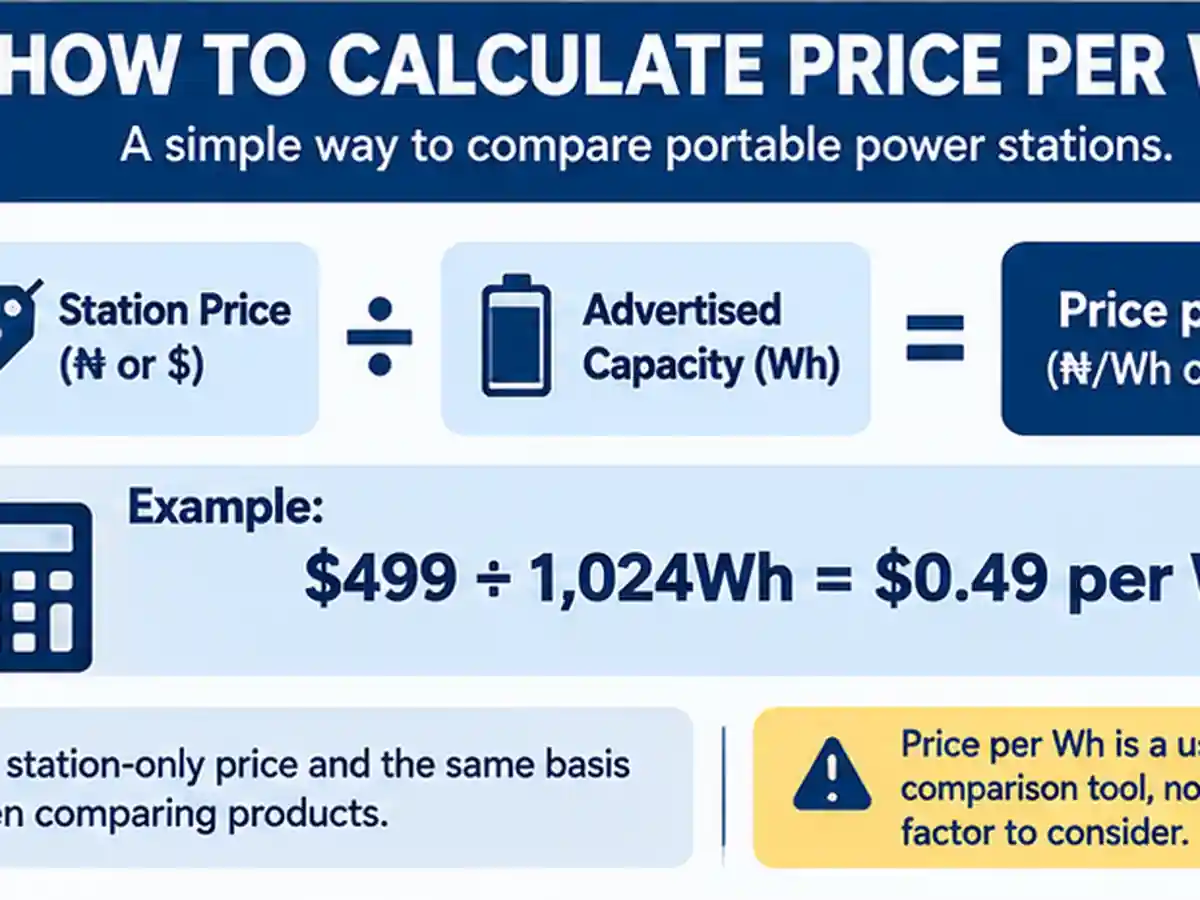 Divide the station-only price by advertised watt-hours to calculate price per Wh.
Nameplate versus
usable capacity
The advertised Wh figure is the station's rated battery capacity. The amount of energy your appliances actually receive can be lower because of conversion losses and other operating factors.
That’s why $/Wh is best treated as a screening measure, not a precise prediction of the energy you will receive. Now compare your $/Wh to others in the same capacity tier.
STEP 2:
COMPARE BENCHMARKS BY CAPACITY TIER
The following planning ranges are based on a 21 September 2026 research snapshot. These are planning ranges, not a quality ranking
Capacity tier
Typical Planning Range price/Wh
Pause + verify if below
Small: 200–399 Wh
$0.50–$0.70
$0.40
Mid: 400–999 Wh
$0.45–$0.80
$0.35
Large: 1,000–2,200 Wh
$0.40–$0.75
$0.30
Small portable
power stations
Small stations often have a higher price per Wh because the battery is compact while the unit still needs an inverter, controls, display, casing and other components.
A price around $0.50–$0.70 per Wh falls within the planning range used here. A figure below about $0.40 deserves a closer look.
Mid portable
power stations
For approximately 1,000–2,200 Wh, the planning range is about $0.40–$0.75 per Wh.
Larger stations can offer more battery capacity for each dollar, but that does not mean every large station is automatically better value.
So when does better capacity for each dollar become a problem?
STEP 3: WHEN A
LOW $/WH IS A RED FLAG (AND WHEN IT’S LEGIT)
Genuine sale or
warning sign?
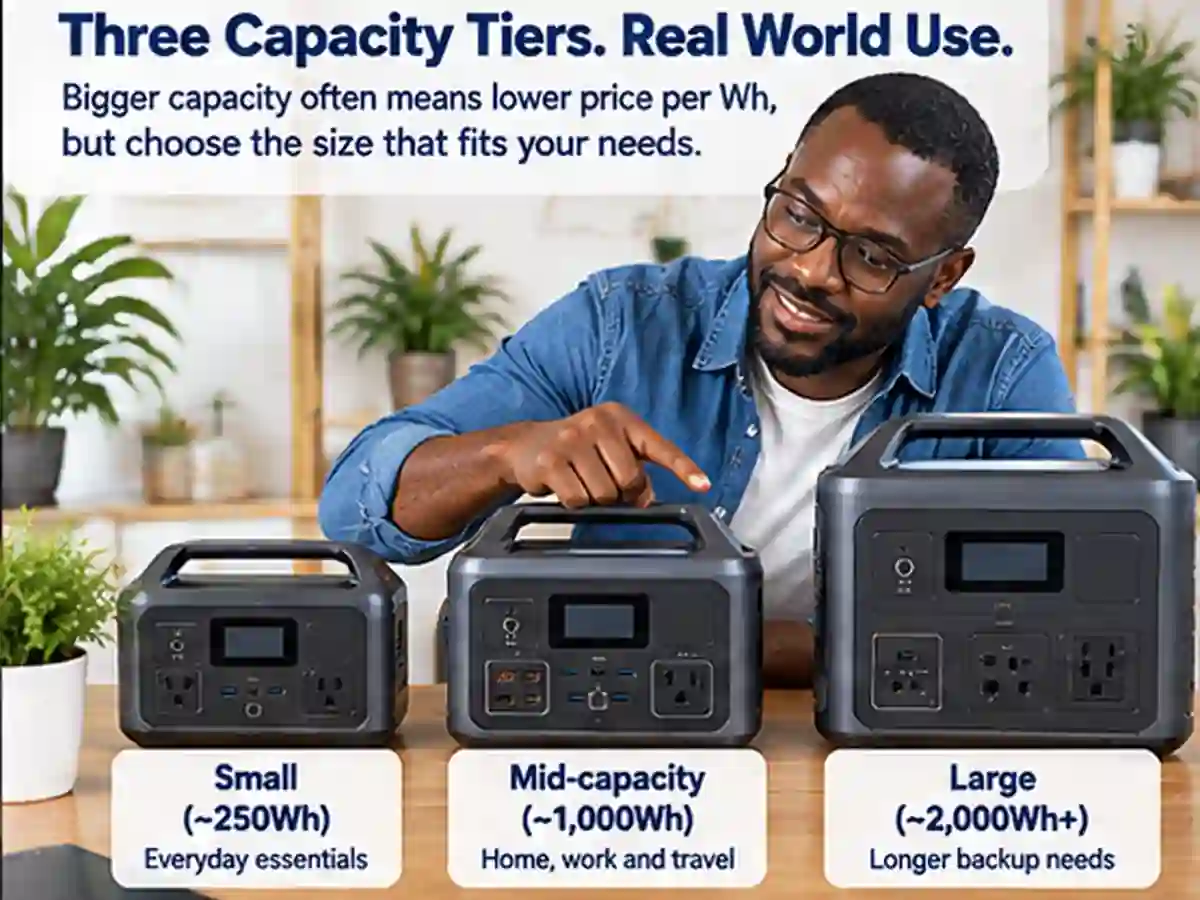
A very low price per Wh is a reason to pause and check, not proof that something is wrong. Before treating a very low figure as value, it helps to understand what a normal price per Wh looks like in that tier.
Check whether the low figure comes from a genuine sale, an older model, a clearance price, or a manufacturer promotion.
Then check the following:
- actual capacity
- continuous output
- battery chemistry
- seller
- warranty
- included equipment
That matters in real life. The first power station I got was very cheap. The price per Wh looked so good on paper, but it could not even power my laptop. So I ended up returning it to the manufacturer. If I hadn’t been driven by low price, I would have made a better decision.
What price per
Wh cannot measure
Price per Wh tells you what you pay for advertised battery capacity. It does not tell you whether the station will actually work for your appliances or be supported if something goes wrong.
It doesn’t show you things like:
- Performance fit: inverter, output, runtime, usable energy
- Trust: warranty support, seller reliability
- Product condition: new, used, refurbished
- Bundle reality: included accessories
That’s why a very low $/Wh should trigger a specs + seller check, not an instant purchase. Also, consider whether the whole offer makes sense for your budget.
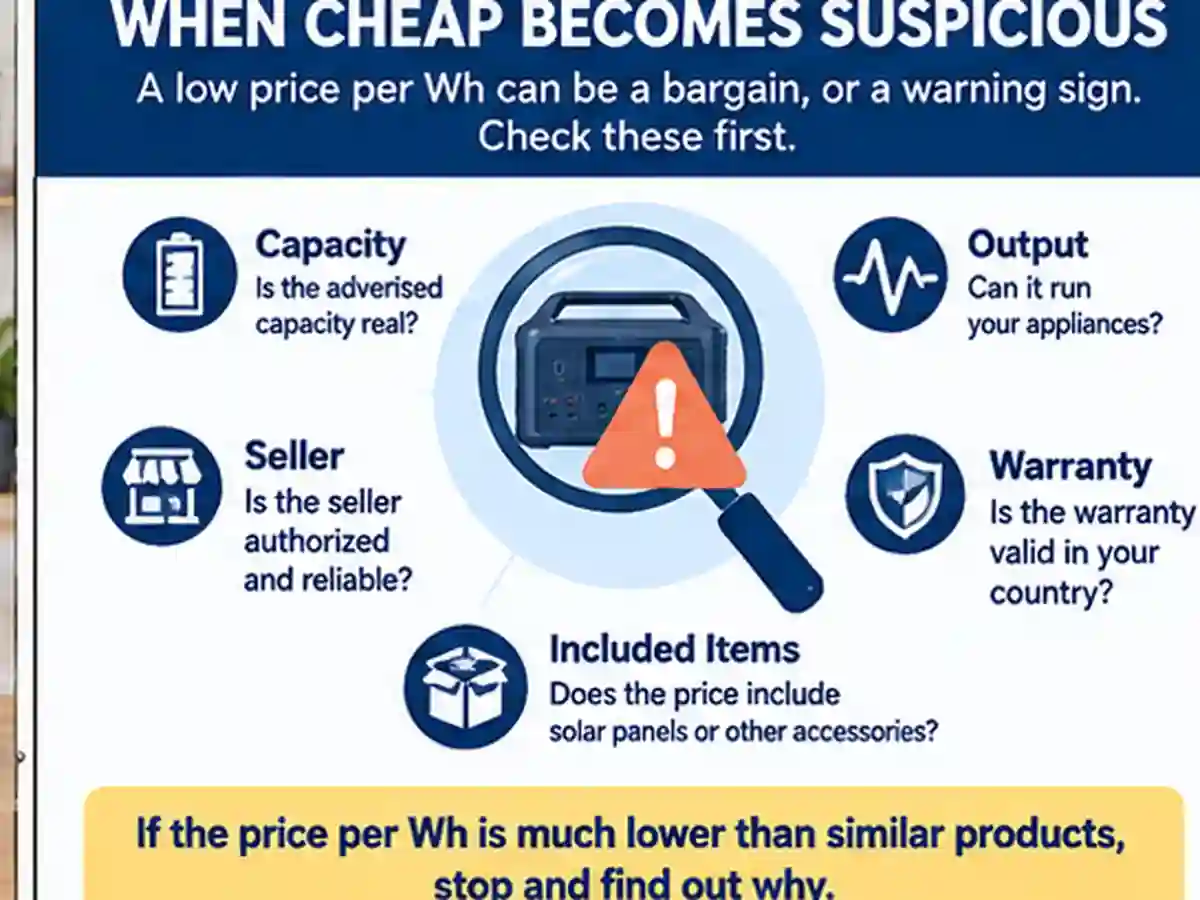 Compare small, mid-capacity and large stations within their own capacity tiers.
STEP 4:
SANITY-CHECK THE WHOLE OFFER, AVOID BENCHMARK TRICKS
Add regional
landed cost
If you are buying in Nigeria, for instance, the advertised US-dollar equivalent is only part of the calculation.
Consider delivery, exchange-rate changes, import duties or other charges, local availability, return shipping, plug compatibility and warranty support.
A station that looks cheap before delivery may not remain cheap after all costs are included.
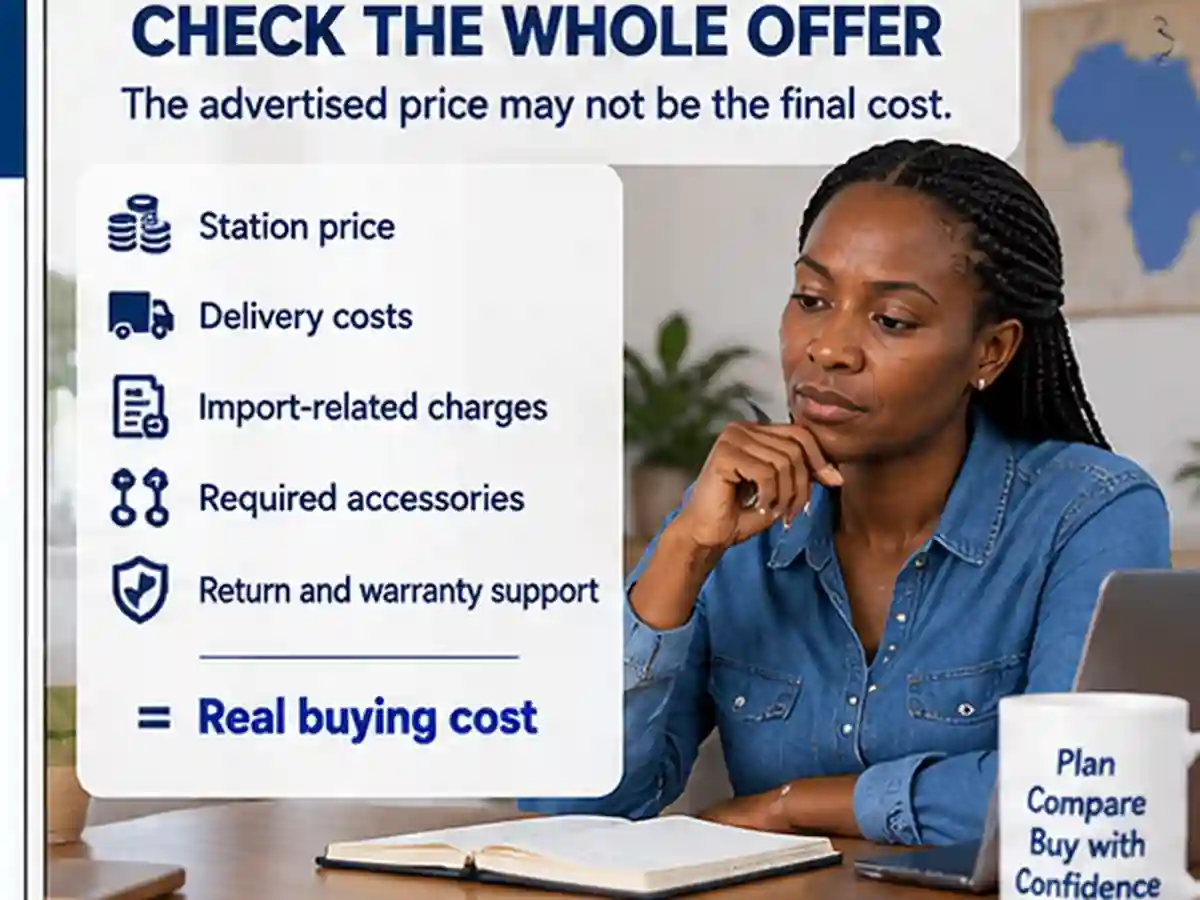 A very low price per Wh should trigger checks for capacity, output, seller, warranty and included items.
Make the final
decision
Use price per Wh as a screening tool. If the price per Wh is normal, move on to the next step in your decision journey. If it’s unusually low, verify why.
The safest comparison is therefore not simply “Which station has the lowest price per Wh?”
It is: “Which station gives me the capacity and output I actually need, from a seller I can trust, at a price that makes sense after I check the whole offer?”
This page helps you screen pricing—then you confirm fit and trust
Want
the red-flag checklist before you buy?
Subscribe and I’ll email you my FREE Power With Confidence checklist—so you can confirm output, warranty, seller trust, and total landed cost when the $/Wh looks ‘too good to be true’. No jargon. Unsubscribe anytime.
Not sure which capacity tier you’re in? Read: How to choose the right Wh size for normal home + outdoor use
Portable Power Station Runtime Calculator
Build your household load list and estimate how long a battery may power it.
Household Appliance Loads
| Appliance | Appliance Watts | Appliance Quantity | Hours Per Day | Daily Energy Consumption (Wh) | Remove |
|---|
Battery Runtime Calculator
Estimate only. Appliance cycling, starting demand, temperature, battery age and the power station’s own consumption can change real runtime.
About The Author
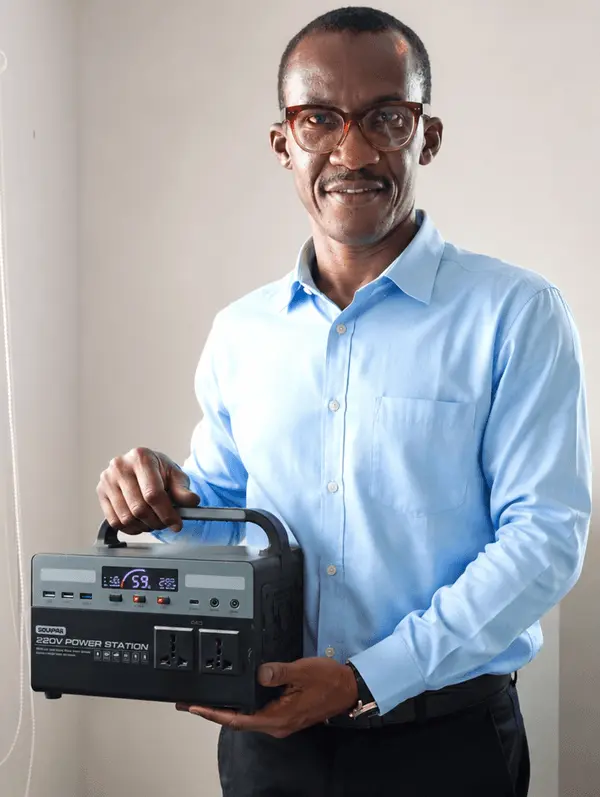
I'm Kaycee. I created Power With Confidence to help you make sense of portable power stations without feeling overwhelmed by technical jargon or pushed into overspending. After spending 3 years using portable power solutions in various situations, my goal is to share practical, honest guidance that helps you buy with more clarity and confidence.
Portable Power Station Runtime Calculator
Build your household load list and estimate how long a battery may power it.
Household Appliance Loads
| Appliance | Appliance Watts | Appliance Quantity | Hours Per Day | Daily Energy Consumption (Wh) | Remove |
|---|
Battery Runtime Calculator
Estimate only. Appliance cycling, starting demand, temperature, battery age and the power station’s own consumption can change real runtime.

Explore The Web
THIS CONNECTS ONE LINK
THIS IS THE RELATED PAGES
TO THE SALES PAGE