- Home
- Budget
- Test Capacity
- Cheap Capacity
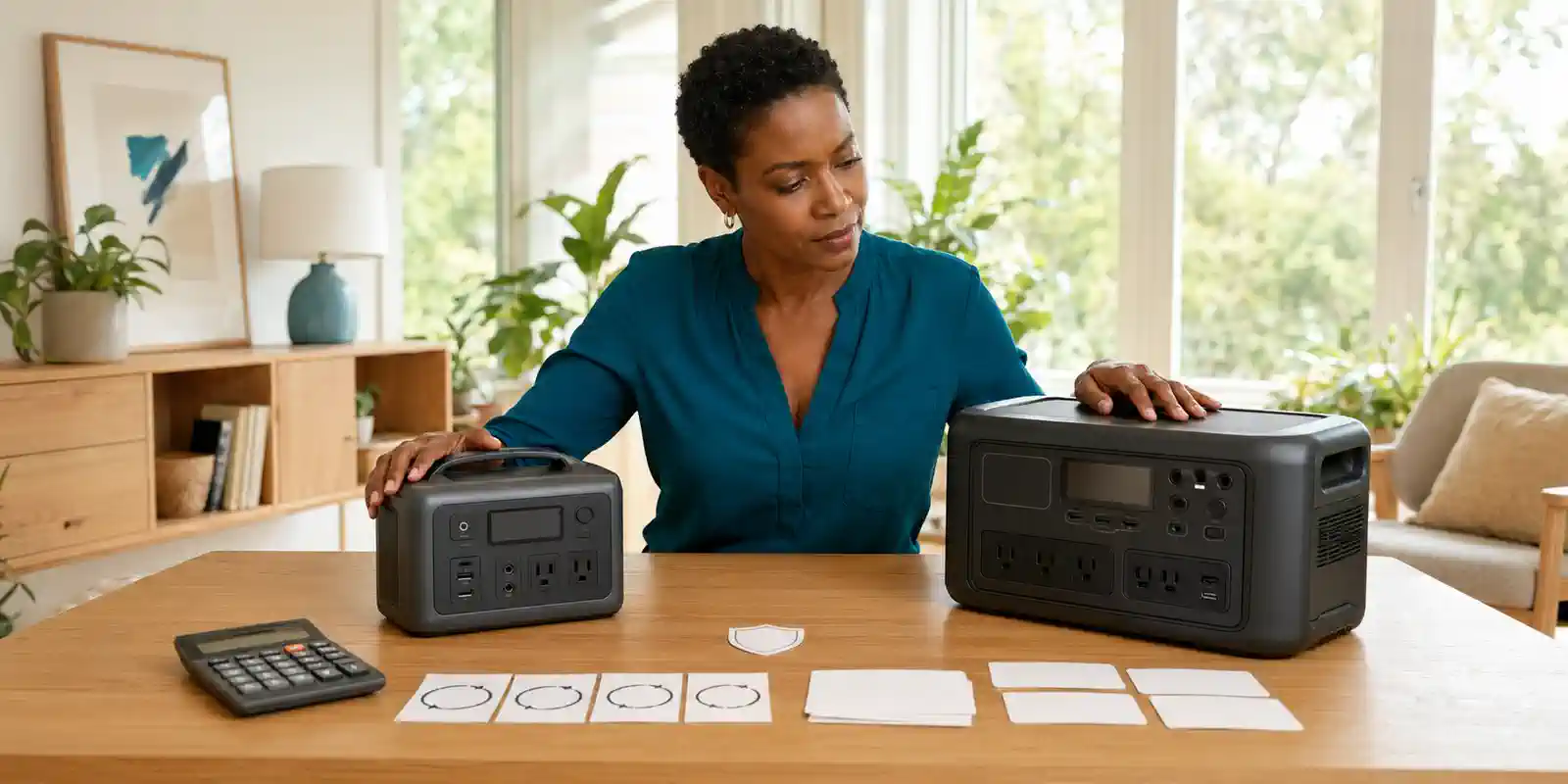 Cheap capacity offers real value only when warranty protection, expected lifespan and replacement costs support the saving.
How Do Warranty Risk, Cycle Life, and Replacement Math Change the True Cost of “Cheap Capacity”?
Cheap battery capacity can offer excellent value, but price per watt-hour does not show the complete ownership cost. A weak warranty, unsuitable cycle life or early replacement can erase the original saving.
The affordable unit remains the better buy when it meets your real usage needs, has credible support and costs less across the period you expect to own it.
WHEN CHEAP CAPACITY MAKES SENSE
A lower-priced portable power station is not automatically a bad purchase. If it safely runs your essential appliances, comes from a supportable seller and suits occasional use, it may deliver exactly the value you need.
Problems begin when buyers divide price by advertised watt-hours and stop there. The result looks precise, but it assumes every watt-hour is usable and both products will provide dependable service for the same length of time.
When cost per Wh helps
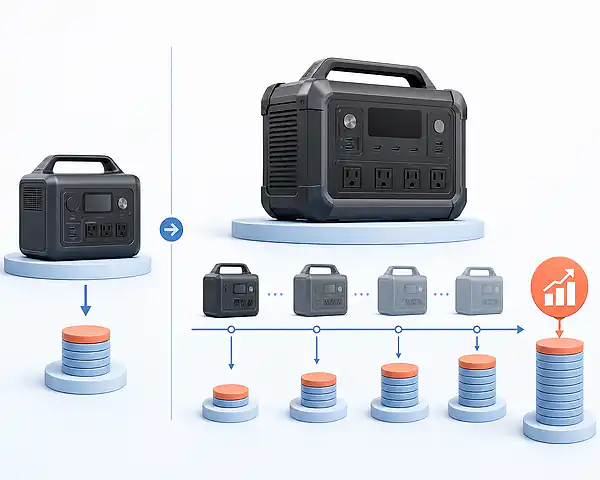
Cost per watt-hour is useful for making a first comparison between products in the same size class. Divide the purchase price by the advertised battery capacity. A $500 station rated at 1,000Wh appears to cost $0.50 per Wh, while a $750 station with the same capacity appears to cost $0.75 per Wh.
That calculation can quickly expose an overpriced model, but it should remain a screening tool rather than the final verdict. It says nothing about how much energy reaches the sockets, whether the inverter can run your appliance, or how long the battery and seller support may remain dependable.
The three checks that reveal value
Check three things: whether the warranty can realistically be used, whether the cycle-life claim matters for your usage, and what happens to the total cost if the unit needs replacing earlier. These checks do not disqualify budget models. They show when the low price is supported by practical value.
Start with the job you need the station to do. A modest unit used for short outages may never need premium specifications. A station used daily for work or refrigeration carries a higher cost of failure, so dependable support and longer useful life deserve more weight.
CHECK WARRANTY AND CYCLE LIFE
Is the warranty credible?
Warranty length is only the starting point.
Check what is covered, battery-capacity exclusions, proof-of-purchase rules, return-shipping costs and whether service is available in your country.
Confirm that the seller is authorised and send support a clear question before buying.
A useful answer from an identifiable support team is stronger evidence than an impressive warranty headline from a company that is difficult to contact.
Do not count warranty protection as part of the bargain until you know how a claim would actually work.
Also check when coverage begins and whether replacement units receive a fresh warranty or only the remainder of the original one.
If returning a heavy station internationally would cost a large part of its purchase price, the written warranty may offer less financial protection than it first appears.
Does cycle life fit your use?
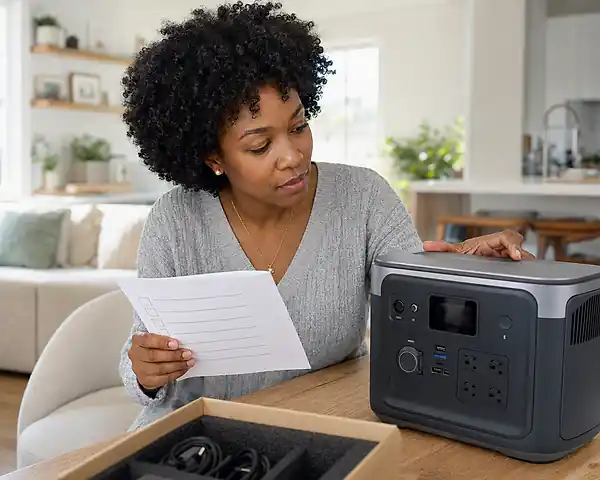
A battery cycle means using and restoring roughly one full charge, even when several partial discharges add up to it. Someone using a station every day may benefit greatly from a high, independently supported cycle rating.
An occasional backup buyer may use relatively few cycles before calendar ageing becomes more important. In that case, paying heavily for thousands of extra cycles may add little practical value. Battery chemistry, storage temperature, charging habits and build quality also affect how useful the headline number becomes.
Read what the manufacturer means by the end of cycle life. A claim of 3,000 cycles to 80 percent capacity does not mean the battery suddenly dies at cycle 3,001. It means the testing target expects about 80 percent of original capacity to remain under stated conditions. Your temperatures, loads and storage habits may produce a different result.
CALCULATE POSSIBLE REPLACEMENT COST
The bargain question most buyers skip is simple: if the cheaper unit fails or becomes inadequate earlier, would buying it again still cost less than choosing the stronger alternative once?
When the cheaper unit wins
The budget model can remain the smarter choice when it covers the essential load, will be used occasionally, has credible seller support, and could be replaced later without exceeding the premium unit’s current price.
It can also make sense when technology is changing quickly and you do not want to pay now for uncertain future needs.
Keep the assumptions realistic.
Do not automatically give the premium model an ideal lifespan or assume the cheaper one will fail early.
Use warranty length, battery chemistry, independent testing and seller history to create a reasonable range. Then compare a best-case, likely case and cautious case instead of pretending one forecast is certain.
When cheap becomes expensive
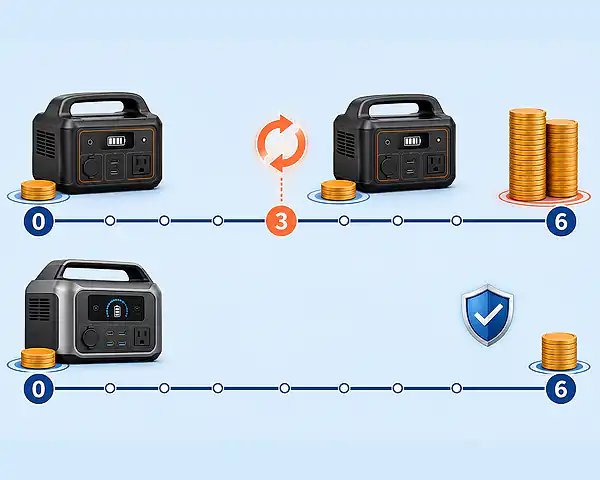
magine a $500 unit that needs replacing after three years. Two purchases would cost $1,000 across six years. A better-supported $750 unit lasting the same six-year period would cost $250 less overall. This is an illustration, not a lifespan guarantee, but it reveals the right comparison.
Use equal periods. Compare both options across the same ownership window. Include likely replacement, shipping, unavailable parts and the inconvenience of losing backup power. If the inexpensive model still wins under reasonable assumptions, it is a genuine bargain—not merely the cheapest product on the day.
For critical backup, consider the disruption cost as well. Losing refrigeration, internet access or work time while arranging a replacement may matter more than the price difference. For casual camping or occasional lighting, that disruption may be minor. The same cheap station can therefore be good value for one buyer and a false economy for another.
MAKE THE SHORTLIST SAFER
Compare protection before price.
Use the complete warranty guide and buying checklist before treating low-cost capacity as long-term value.
About The Author

I'm Kaycee. I created Power With Confidence to help you make sense of portable power stations without feeling overwhelmed by technical jargon or pushed into overspending. After spending 3 years using portable power solutions in various situations, my goal is to share practical, honest guidance that helps you buy with more clarity and confidence.
Portable Power Station Runtime Calculator
Build your household load list and estimate how long a battery may power it.
Household Appliance Loads
| Appliance | Appliance Watts | Appliance Quantity | Hours Per Day | Daily Energy Consumption (Wh) | Remove |
|---|
Battery Runtime Calculator
Estimate only. Appliance cycling, starting demand, temperature, battery age and the power station’s own consumption can change real runtime.

Explore The Web
THIS CONNECTS ONE LINK
THIS IS THE RELATED PAGES
TO THE SALES PAGE